


Letters in Motion: The Making of Škoda’s Vision-O


For the unveiling of its Vision-O concept car, Škoda wanted a visual language that expressed the human process of design itself. To realise that ambition, New York-based production powerhouse Aggressive's Dan Shapiro, Alex Topaller and CG specialists Alex Mikhaylov, Max Chelyadnikov (a.k.a Loop), partnered with Czech production company CINQ, on a three-film campaign that turns words into the raw material of creation.
For the shoot, since the Vision-O didn’t actually yet exist, the teams worked with a stand-in Škoda model on the streets of Prague, using a hand-built wooden interior frame on green screen which was later replaced with a fully CG car. But what truly sets the campaign apart is its conceptual core: a “storm of questions” that evolves from sound into form.
With co-direction from Alex Topaller and Dan Shapiro (Aggressive), and Alex Mikhaylov and Maxim Chelyadnikov (Loop), and production from Alexander Aab (Aggressive), and Robert Roszbeck and Vanessa Kristufkova (CINQ), the project is a masterclass in collaborative craft and technical precision.
Through an intricate blend of live-action, procedural text simulations, and Houdini-driven CG transformations, the films embody Škoda’s philosophy that form and function are inseparable. The result is a striking synthesis of precision and humanity, and a shining example of how creative collaboration across continents can push the boundaries of what it means to ‘shoot a car commercial’ in 2025.
Getting the lowdown on what it took to ensure the shoot for this dynamic concept went as smoothly as possible, LBB’s April Summers sits down with the teams from Aggressive and Loop.
LBB> This campaign turns language into the raw material of design. How did that central metaphor take shape creatively? How did you translate it into a visual concept that could drive three films?
Alex T.> It all began with this wonderful concept from the guys at FCB London — the super talented Lucas Arantes, Vinny Couto and Guy Hobbs — imagining words not as static typography, but as particles of thought: alive, fluid, tactile, and sculptural. That’s how our visual language was born — we started collaborating, and the rest followed.
Each letter moves with intention, guided by invisible currents of curiosity, assembling into the shape of the car the way an idea takes shape in the mind. Finally, the type crystallises into the glass, metal, and precision details of the real Vision-O. Just as we hear the final question, "What if we just… kept driving?", the car emerges from our abstracted Škoda ‘green world’ into the real city streets.
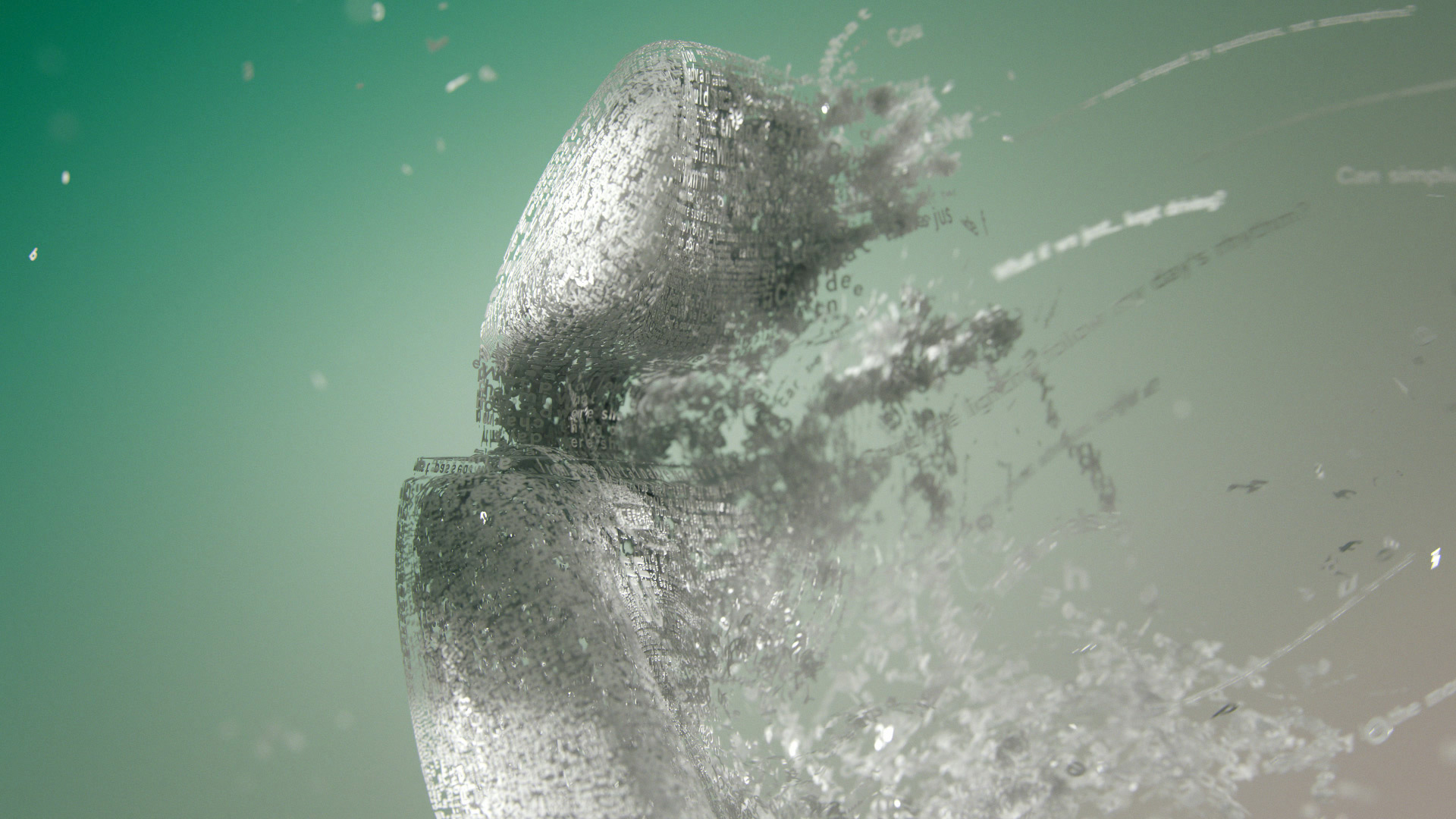
Dan> Driven by an audio tapestry of real voices, these films express that form and function are inseparable. They demonstrate that truly great design is a profoundly human process, meeting human needs and answering human questions, however idiosyncratic, personal, or un-technological they may be.
LBB> It must have been quite a challenge to visualise something that didn’t yet exist, so how did you plan for this both in terms of the car and its conceptual essence? Before you even rolled cameras, were there any big creative or technical challenges you needed to solve?
Maxim & Alex M.> To craft the fully CG Vision-O concept car, we used early engineering materials and reference renders provided by the client as our North Star, as well as conversations with the engineering team at Škoda HQ, walking through each of the material innovations and textural details of the car.
Alex T.> Creatively, our key challenge was ensuring that our typography and questions felt ‘human’. It’s easy for motion design to feel cold, but we wanted every word to feel like it came from a real person – a thought, a curiosity, a doubt. The type had to breathe with the voices as it sculpted the car into being.
LBB> The films are built around this evolving “storm of questions” – what was the process for designing how text, motion, and light would interact from script to storyboard to execution?
Dan> Early in the process, in tandem with the storyboards, we created a detailed pre-vis around a myriad of real voices reading the questions. That soundscape became the emotional backbone of the piece, directly informing the pacing of our shots and how our typography would move on-screen.
Maxim & Alex M.> The ‘storm of questions’ became our design language. A choreography of text, motion, and light that builds the Vision-O piece by piece. Beyond defining the form and materials of our car, the dynamic lighting throughout the film guided the viewers’ point of interest amid the chaotic particle clouds. The moving sunlight streaks lent our abstract ‘green world’ a tactile, inviting quality – a hint of the real world breaking through, connecting to the sunlight of the city streets in the final scene.
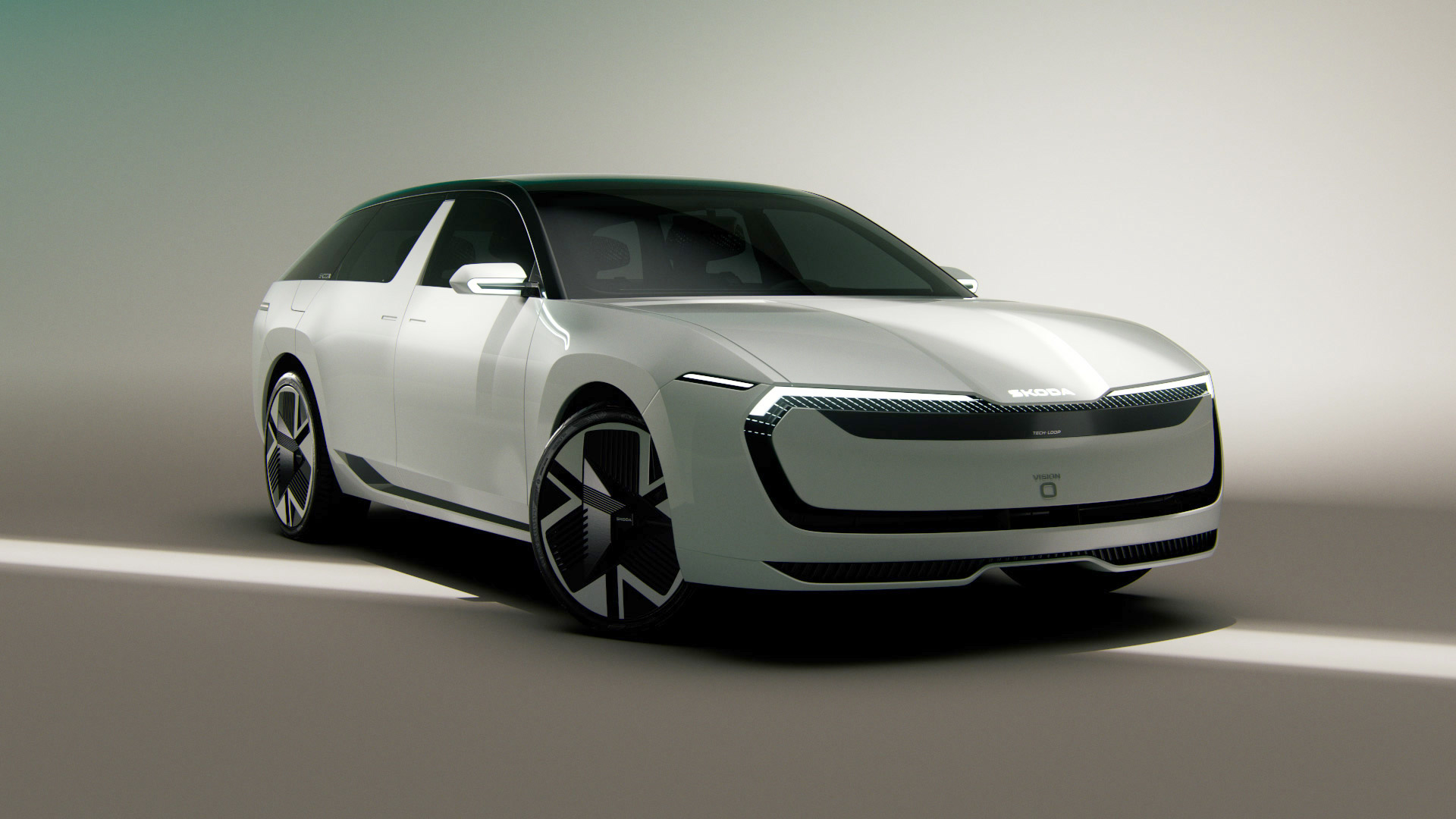
LBB> How did the partnership with CINQ and their producers, Robert Roszbeck and Vanessa Kristufkova, support the process?
Alexander> This project was a fast one, about two-and-a-half months in all, but everything clicked thanks to Robert, Vanessa and the incredible team at CINQ. They made the process seamless, from communication to setting up the shoot in Prague.
LBB> You shot on the streets of Prague with a stand-in Škoda model. What were the creative and logistical challenges of shooting something that would later be completely transformed? Were there specific choices on set in regards to lensing, lighting references and HDRI capture that proved critical later in post?
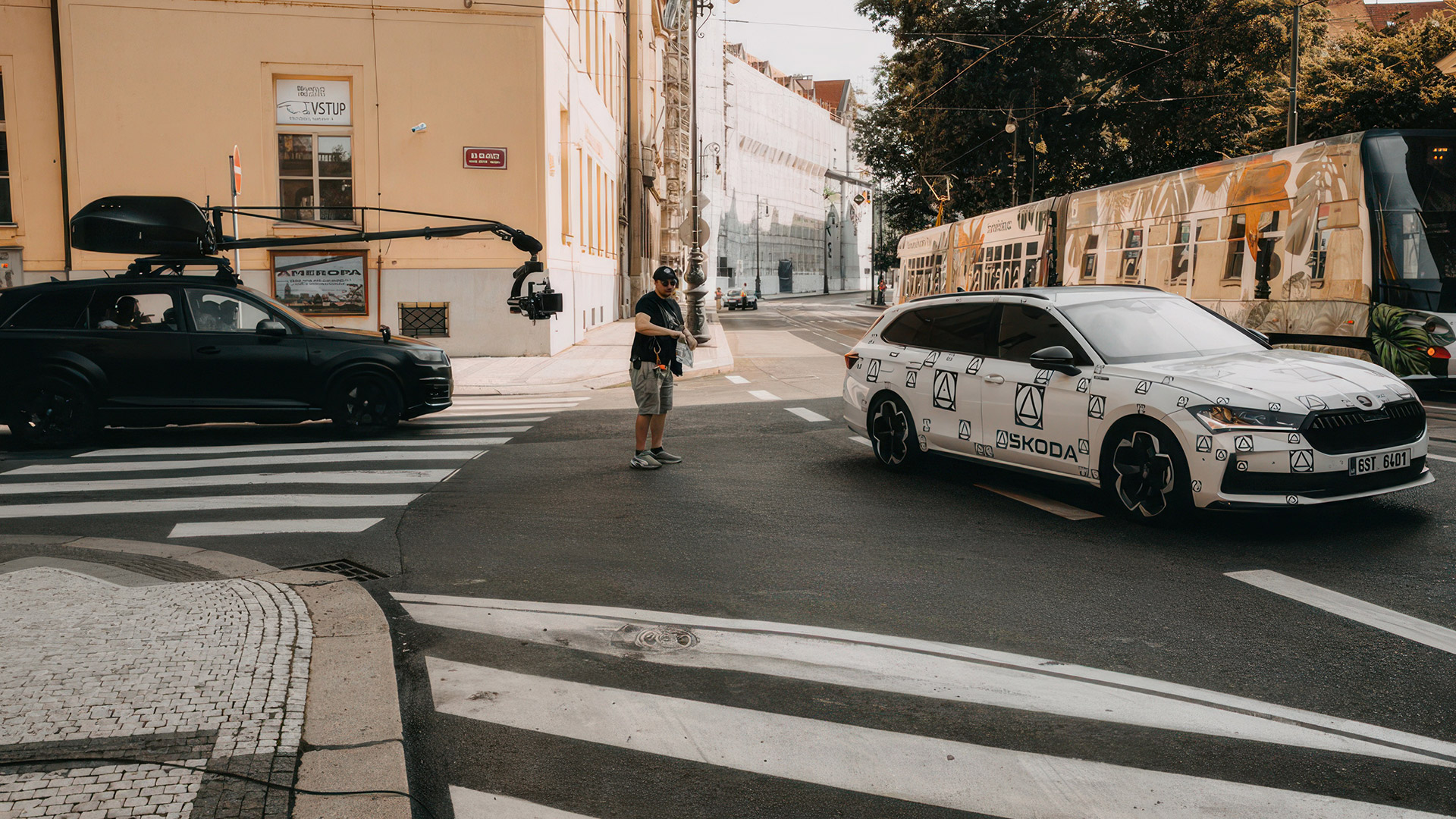
Alex T.> For our final scene, it was essential to capture the authenticity and performance that would make the CG car feel rooted in the real world. We shot our tracker stand-in car on the streets of Prague using a U-crane, which gave us authentic reflections, motion, and light interaction for the CG replacement. At the same time, 360-degree video reflection maps were recorded from our stand-in during each take, together with HDRI and Gaussian splat scans of the location, all of which was key to grounding the CG car in the real world.
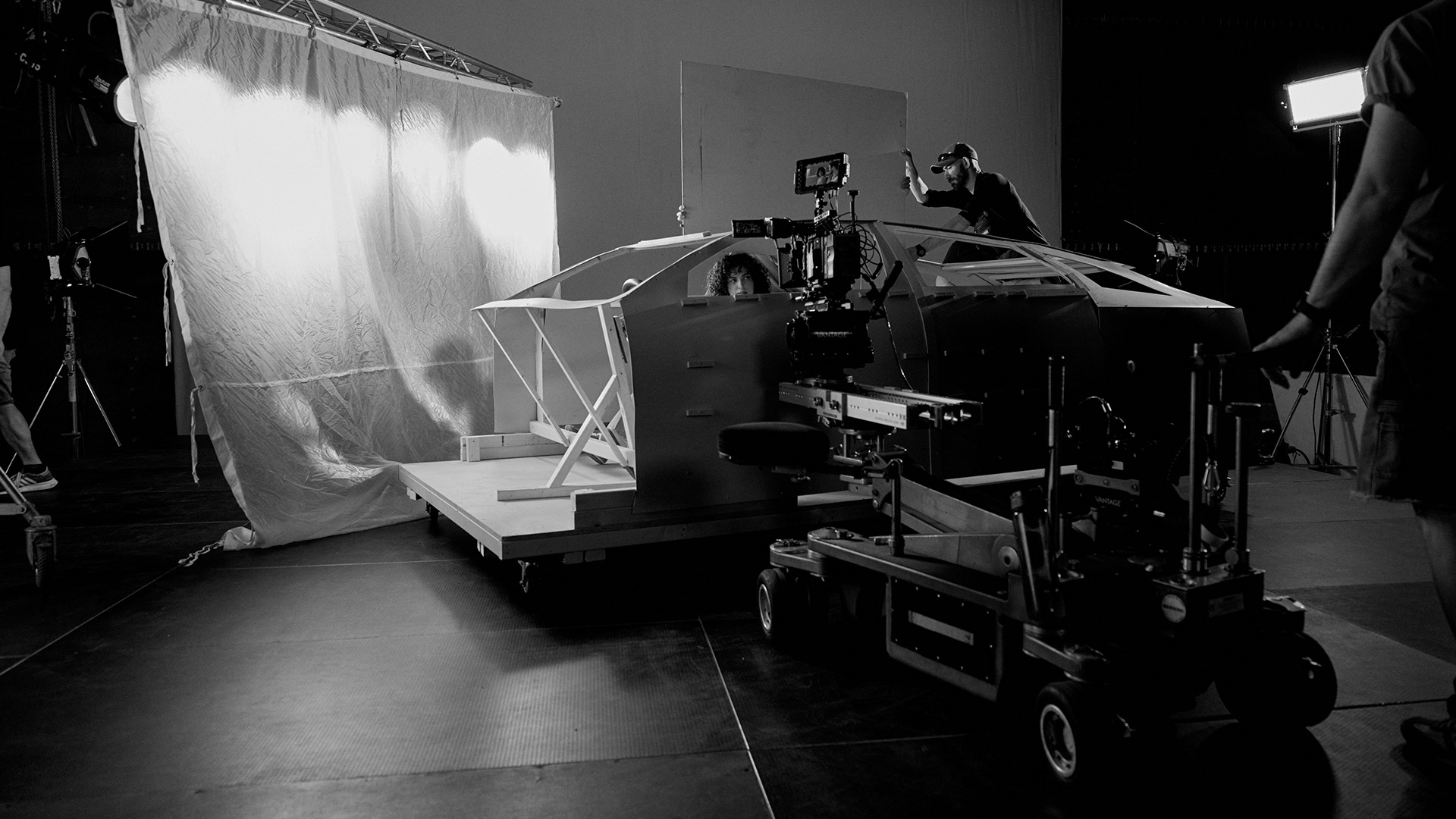
For the interior scenes, we built a rough wooden frame that only hinted at the car’s shape, and shot the talent against the green screen. It sounds primitive, but it gave us real shadows, contact points, and a sense of physicality that grounded the final CG build.
LBB> Can you unpack the division of labour between TyFlow and Houdini? How did each tool serve a different creative or technical purpose? And what was the biggest technical challenge of building a fully CG car reveal that still feels tactile and human?
Maxim & Alex M.> We built the pipeline across 3ds Max, TyFlow, Houdini, and After Effects, juggling caches, data exchanges, and custom forces to keep everything art-directable. All the type particles were done with TyFlow, while Houdini was used for the realistic car transition animations. The trick was finding that sweet spot between all of these various simulations, letting the simulation breathe while keeping it visually legible and emotionally human.
Alex T.> There was a lot of back and forth when designing the exact look of the transformation and how the letters become the car. We spent a lot of time experimenting with how type morphs into sheet metal, glass, and car paint, testing particle and surface effects to make that transition feel seamless.
LBB> Looking back, what was the most rewarding creative moment in the process? And if you had to describe the collaboration between Aggressive and Loop in one word, what would it be?
Maxim & Alex M.> The most rewarding moment for us was when we realised that the seamless blend between the floating particles, the ‘car made of type’, and the photorealistic car finally aligned together perfectly; it was definitely the most challenging aspect of the project.
Dan> We’ve been collaborating and creating together for over 15 years – so long that it’s hard to put a finger on it. It may be something like ‘flow’, a word that describes incredible levels of efficiency, and a creative shorthand that takes years to develop.


