


Beyond the Ad: Entering the Stranger Things Universe


Director Tomo Terzano, extraterrestrial researcher Jaime Maussan, and director Fernando Cattori.
When Netflix and .Monks proposed merging the Stranger Things universe with Jaime Maussan, the challenge was clear from the very first moment: it could not be a parody, nor a superficial wink. It had to feel real. So serious, and so faithful to the language of the series, that the combination would feel inevitable.
For Mama Hungara, the project marked a return to working with Netflix following the Wednesday campaign, while taking on a piece with a level of demand rarely seen in advertising. Directed by Fernando Cattori and Tomo Terzano, the spot required cinematic precision, a self-contained narrative and VFX work capable of reproducing, without room for error, a visual universe that millions of fans know by heart.
From a production standpoint, the starting point was as rigorous as it was challenging.
“It was an unusual project, with vibrant creativity, and an enormous privilege to work alongside an iconic figure like Jaime Maussan,” says Tomás Gómez del Fresno, managing director of Mama Hungara Mexico.
Netflix provided clear guidelines, assets and references, but the team had to adapt them to the local context and build a story that could stand on its own, without relying on the series’ broader narrative.
“There was a very defined visual language to respect, but also a dramatic line that needed reinterpreting. Striking the balance between fidelity and adaptation was key,” explains executive producer Carolina Bonilla.
Inside the VFX Process
That balance extended across every department. In VFX, the challenge was even greater: this was not about creating a new identity, but about reproducing with absolute precision a visual language developed over several seasons.
“Any deviation would be immediately obvious to fans,” notes André Pulcino, executive producer of VFX.
The team worked through a pipeline that combined meticulous reference analysis, digital reconstruction and advanced compositing. Vines, spores, skies, creatures and glitches were all modelled and animated from scratch to integrate seamlessly with the live-action footage. Entire backgrounds were also replaced: across several locations, for instance, footage shot in the village of Salazar in La Marquesa, near Mexico City, had to be digitally transformed into the city of Tampico, accurately recreating its atmosphere, scale and geography. The work was rounded off with narrative-specific effects, such as the Desert of Silence and a videogame-style Easter egg, expanding the story without breaking the coherence of the Stranger Things universe.
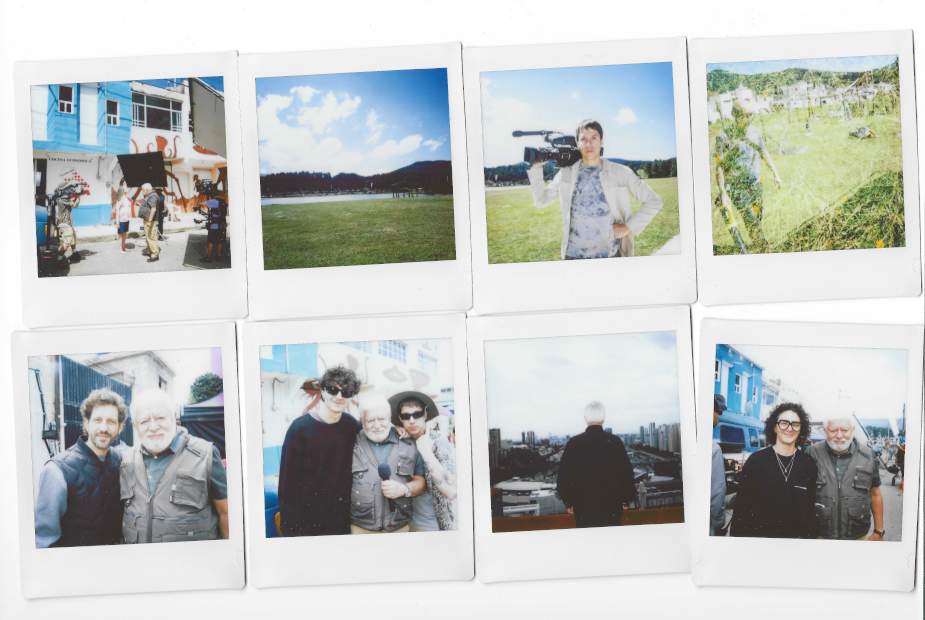
For the directors, the process was almost archaeological.
“We had to understand the ‘why’ behind everything: the camera, the colour palette, the lighting, what the series does and what it doesn’t do,” says Tomo Terzano.
“Bringing Stranger Things together with Jaime Maussan was a bold and very intelligent creative move. It’s been a long time since we’ve seen a piece that recaptures that playful spirit, supported by such a precise narrative,” adds Fernando Cattori.
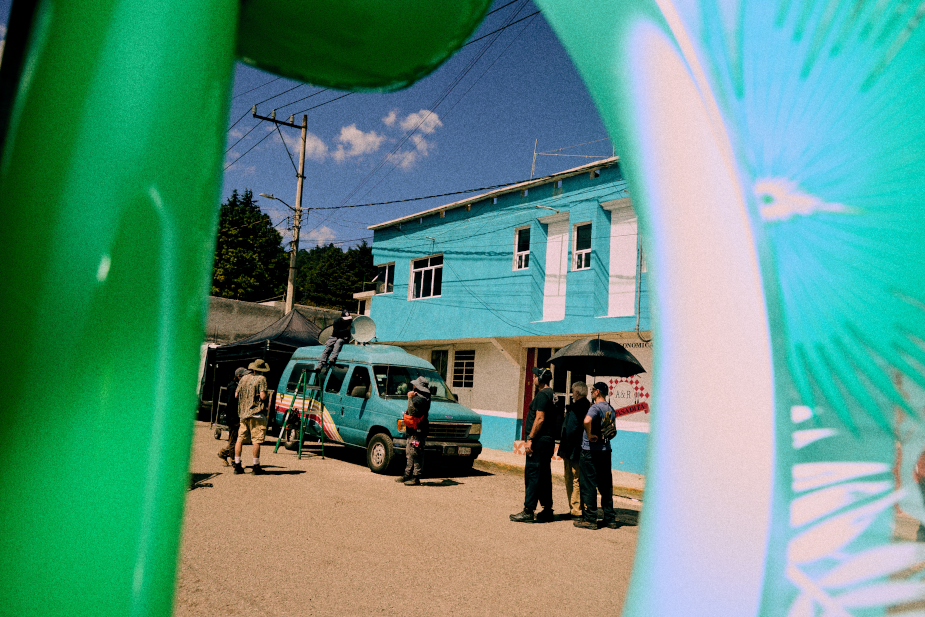
Filming in the town of Salazar, La Marquesa, Mexico City
The result is a piece that operates in a territory rarely explored by advertising: it looks, feels and unfolds like a fragment of the Stranger Things world. A collision between fiction and pop culture that works precisely because it is driven by research, method and a shared obsession with detail.
More than a launch, the project became an exercise in creative precision, one of those rare productions where direction, production, VFX and agency all pull in the same direction to achieve something simple to explain, but extremely difficult to execute: making the audience believe, if only for a few seconds, that they are watching part of an episode of the series.


