


Has YouTube Become the New Destination for Podcasts?


Just when we thought the media landscape seemed complicated enough, we have seen podcasts shift from audio-only experiences to another form of visual, long-form content.
For brands, this shift in behaviour presents a valuable opportunity: if audiences are choosing to watch as well as listen, it opens up an additional touchpoint to reach and connect with them, combining audio with visual formats to engage more deeply and unlock access to hard-to-reach consumers.
Here’s the short of it, long-form video content is not dead
Consumer attention spans have been distorted with the algorithms of TikTok and Instagram presenting users with highly engaging, short-form, content. This, coinciding with the amount of choice and media fragmentation that users experience means that brands have been operating under the impression that they need to fight to get a user’s attention - 85% of digital ads are getting less than 2.5 seconds of attention.
This is still the case, but long-form content, especially when it comes to podcasts, is still very much alive.
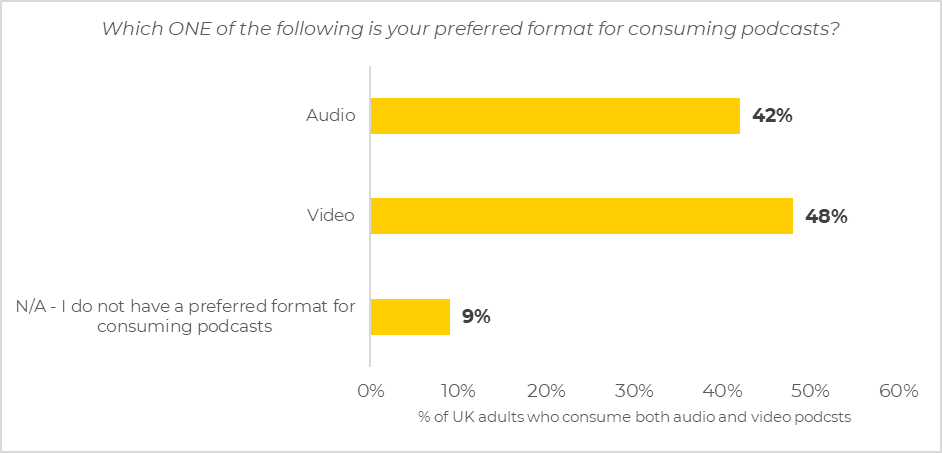
Almost half of UK podcast listeners say they prefer a video format for consuming podcasts and as a result, over 1 billion monthly active users are viewing podcasts on YouTube .
Source: YouGov: Are Podcasts Going Visual, Jul 2025
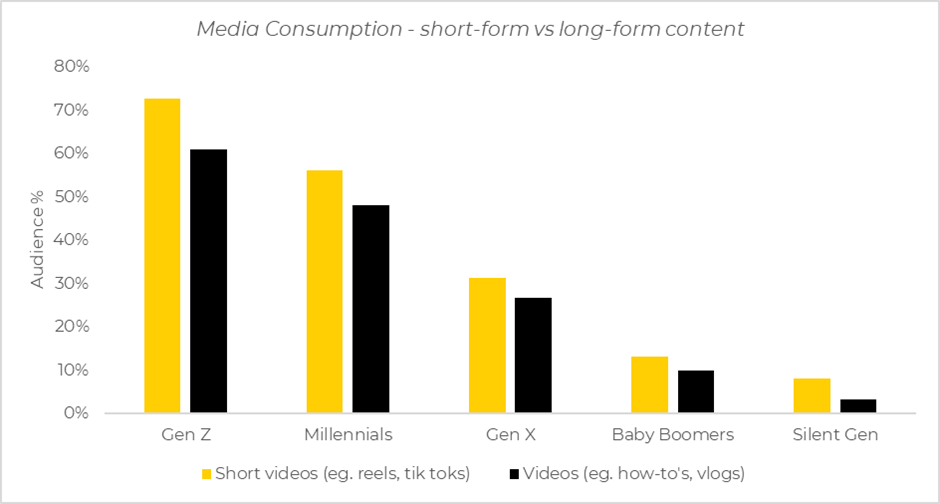
This almost seems counterintuitive with the popularity of short-form-focused social platforms and shortening consumer attention spans but when we look at media consumption data, the time spent consuming short-form content is not significantly more than long-form, firmly suggesting that consumers both engage with and enjoy long-form content.
Source: GWI Core, Waves: Q2 2024 – Q1 2025, Media Consumption: short videos and videos, media users’ segmentation: medium/heavy
When we look to the expansion of podcasts from audio-only to both audio and visual media, YouTube and its dominance has a large part to play.
Has YouTube become the jack of all trades?
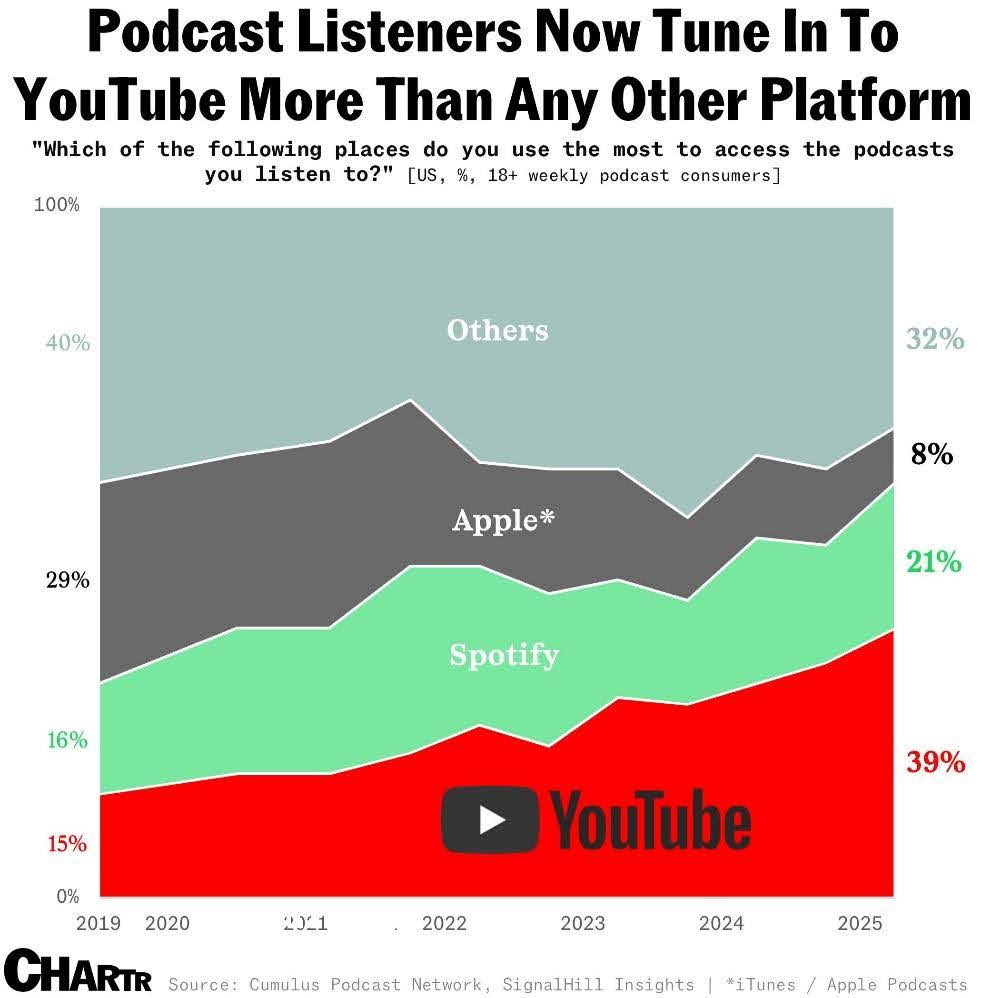
In recent years we’ve seen YouTube become a core channel for music, TV and now, and maybe most surprisingly, podcasts. 39% of all weekly podcast consumers use YouTube as their primary platform, more than double the share from late 2019.
Podcasts’ niche has always been its in-ear connection with users, with 90% of listening happening through headphones. They rank #1 against all other media for being good for learning and being mentally engaging, and this is largely because of their format.
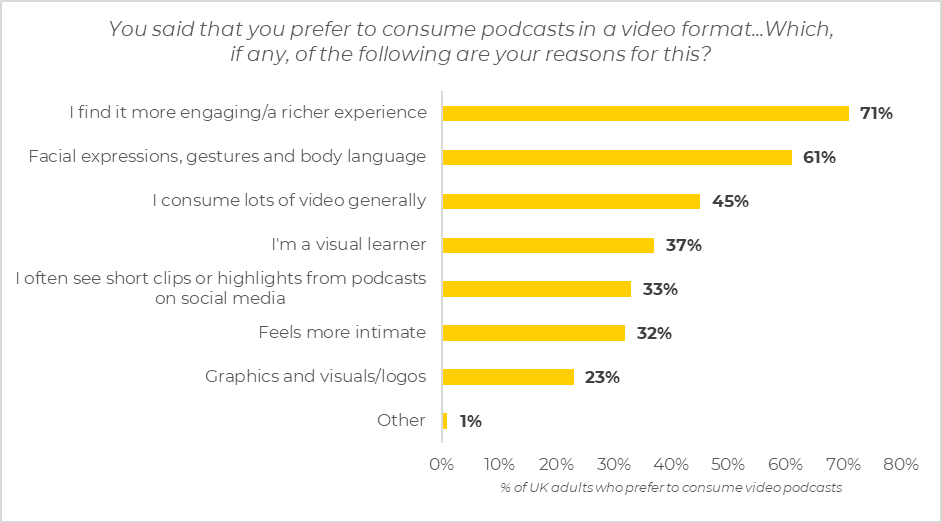
So why, have we seen a growing number of listeners choose to now watch their favourite podcasts on YouTube? There are two angles to this and it’s from both the side of the listener but also the side of the podcasters.
Source: YouGov: Are Podcasts Going Visual, Jul 2025
For listeners, a lot of the major podcasts who have extended their content to YouTube have engaging hosts – think Steven Bartlett, Elizabeth Day or Joe Rogan, for example. It’s not enough to just listen to Joe Rogan interview Donald Trump or Steven Bartlett chat with Michelle Obama, they want all-access and by watching on YouTube, users can observe body language and the host-interviewee interaction. What makes a lot of these people interesting is more than just what they have to say.
Podcasts have a unique ability to reach consumers at personal moments due to their in-ear format and while this cannot easily be replicated, video-podcasts can be an extension of that. Bringing a lot of interview-style podcasts to visual platforms brings the user into the room, replicating that close, personal format but just on an additional channel.
For podcasts, much of the appeal is financial. Podcast CPMs are generally higher than YouTube’s, but YouTube offers far more monetisation opportunities, through sponsorships and channel memberships for example (WARC). Beyond revenue, YouTube also acts as a gateway to their other content, helping to nurture a community that’s become essential for maintaining consumer engagement, the very engagement that brands are competing to hold on to.
The opportunity for brands
It may seem tricky for brands to determine where targeting users via video podcasts can now fit into their media strategies, especially if both podcasts and YouTube have already proven to be strong, effective channels for driving awareness independently.
The extension of podcasts to a visual platform provides an additional touchpoint to reach audiences in a format that can feel close and personal.
Ultimately, this shift from podcasts as an audio-only media to another form of long-form content is a win for both consumers and brands. While the two channels have different strengths, from a cost perspective, ads on podcasts generally command higher prices than those on YouTube, so for brands looking for a cost-effective strategy, YouTube may prove the better platform. Additionally, with YouTube falling under the Google ecosystem, there is the added advantage of simpler targeting and measurement. But for brands aiming to maximise reach, combing both channels means you can reach your audience at an additional touchpoint and with different creative formats to reinforce messaging and encourage cross-platform engagement.


